Showing posts with label Interview. Show all posts

Friday, July 14, 2017

VIDEOS: Frank Zappa Explains the Decline of the Music Business (1987)

by , Open Culture: http://www.openculture.com/2016/09/frank-zappa-explains-the-decline-of-the-music-business-1987.html

“Remember the 60s?” says Frank Zappa in the interview above, “that era that a lot of people have these glorious memories of?... they really weren’t that great, those years.” Ever the grumpy uncle. But Zappa does get nostalgic for one thing, and it’s an unexpected one: the music business. “One thing that did happen in the 60s,” he says, “was some music of an unusual and experimental nature did get recorded, did get released.” The executives of the day were “cigar-chomping old guys who looked at the product and said, 'I don’t know. Who knows what it is? Record it, stick it out. If it sells, alright!'”
“We were better off with those guys,” says Zappa, “than we are with the hip, young executives,” making decisions about what people should hear. The hippies are more conservative than the conservative “old guys” ever were. This Zappa of 1987 recommends getting back to the “who knows?” approach, “that entrepreneurial spirit” of the grand old industry barons of the 60s. One can almost imagine Zappa—in the 60s—pining for the days of Edison, who refused to give up on the wax cylinder but would also record virtually anything. If both the time of Edison and the time of Zappa were bonanzas for makers of novelty records, so much the better. Zappa was novel. 
Still it seems like a funny sentiment coming from a guy who built most of his career in opposition to the record industry. But it was in the period of alleged decay that Zappa broke with Warner Bros. and founded his own label in 1977, making a deal with Phonogram to distribute his releases in the U.S. When Phonogram refused to release his 1981 single “I Don’t Wanna Get Drafted,” Zappa created another label, Barking Pumpkin Records, making sure he got to make and sell the music he wanted to.
In many ways people like Zappa---or later Kate Bush or Prince---anticipated our current music industry, in which we have artists starting labels left and right, controlling their own production and output. But those artists are mostly a tiny handful of hugely successful stars with mogul-sized ambitions. Does this help or harm the music economy as a whole? Independent musicians very rarely get the smallest window on how things work at the level of Beyonce, Jay-Z, or Taylor Swift (who "is the industry," Bloomberg once breathlessly proclaimed). But as Zappa notes, “the person in the executive chair may not be the final arbiter of taste for the entire population.” Even if those executives are themselves artists, we may greatly benefit from a wider range of "unusual and experimental" sounds in popular culture. Zappa suggests the way to do that is to get the "cigar-chomping old guys" (and they were all guys) back in charge. 
The rest of Zappa’s interview concerns the bogeyman of 80s and 90s music, the PMRC, and his very strong feelings about censorship, social control, and sex. It’s classic Zappa and won’t raise any eyebrows now, but it is interesting to hear his take on the decline of the music business since the 60s. We use different criteria to measure the apex of the industry---often depending on whether the labels or the artists made more money. Whichever period we lionize, for whatever reason, within a hundred-year window a tiny handful of musicians and record executives made enormous, dynasty-making fortunes. It just so happens that these days it's an even tinier handful of musicians and executives at the top, making even huger fortunes. And there's a lot more synergy between them. 

Friday, December 6, 2013

VIDEO: Jerry Garcia Talks About the Birth of the Grateful Dead and Playing Kesey’s Acid Tests in New Animated Video

by , Open Culture: http://www.openculture.com/2013/11/jerry-garcia-talks-about-the-birth-of-the-grateful-dead.html

Josh Jones is a writer and musician based in Durham, NC. Follow him at @jdmagness


Before the Grateful Dead recorded their classic eponymous country psych album, before they were the Grateful Dead, they were the Warlocks, “playing the divorcees bars up and down the peninsula,” Jerry Garcia tells us above.

Their booking agent “used to book strippers and dog acts and magicians and everybody else.” Their first few gigs “sounded like hell,” says Garcia, “very awful.”

In this Blank-on-Blank-animated 1988 interview with former Capital-EMI record executive Joe Smith, Garcia gets into the origin of their name (a story involving the East Coast Warlocks, who might have sued. What he doesn’t mention is that the Velvet Underground - inventors of East Coast psych - also played at that time as the Warlocks).

Smith was with Warner Bros. when the Dead were signed in 1967. His relationship with the band then was frustrated, and he went so far as to call the recording of their second album “the most unreasonable project with which we have ever involved ourselves.”

But this conversation is a funny, cordial exchange between two very affable people with surprisingly good memories of the time (Smith also once said the Dead “could have put me in the hospital for the rest of my life”).

Jerry tells the story of their invitation to Merry Prankster and psychedelic genius Ken Kesey’s acid test parties in La Honda, California.

It’s more or less the history of the West Coast acid rock scene and its apotheosis at Haight-Ashbury, so kind of essential watching, I’d say, but at less than six minutes, you can afford to be the judge.

Wednesday, November 20, 2013

INTERVIEW: Flashback from 1975 - The Rebellious Neil Young


Nearing 30, Neil Young is the most enigmatic of all the superstars to emerge from Buffalo Springfield and Crosby, Stills, Nash and Young
 
His often cryptic studies of lonely desperation and shaky-voiced antiheroics have led many to brand him a loner and a recluse.
 
Harvest was the last time that he struck the delicate balance between critical and commercial acceptance, and his subsequent albums have grown increasingly inaccessible to a mass audience.

Young's first comprehensive interview comes at a seeming turning point in his life and career.

After an amicable breakup with actress Carrie Snodgrass, he's moved from his Northern California ranch to the relative hustle and bustle of Malibu.

In the words of a close friend, he seems "frisky ... in an incredible mood." Young has unwound to the point where he can approach a story about his career as potentially "a lot of fun."

The interview was held while cruising down Sunset Boulevard in a rented red Mercedes and on the back porch of his Malibu beach house.

Cooperative throughout, Young only made a single request: "Just keep one thing in mind," he said as soon as the tape recorder had been turned off for the last time. "I may remember it all differently tomorrow."

Why is it that you've finally decided to talk now? For the past five years journalists requesting Neil Young interviews were told you had nothing to say.

There's a lot I have to say. I never did interviews because they always got me in trouble. Always. They never came out right. I just don't like them.

As a matter of fact, the more I didn't do them the more they wanted them; the more I said by not saying anything. But things change, you know. I feel very free now. I don't have an old lady anymore. I relate it a lot to that.

I'm back living in Southern California. I feel more open than I have in a long while. I'm coming out and speaking to a lot of people. I feel like something new is happening in my life.

I'm really turned on by the new music I'm making now, back with Crazy Horse. Today, even as I'm talking, the songs are running through my head. I'm excited.

I think everything I've done is valid or else I wouldn't have released it, but I do realize the last three albums have been a certain way. I know I've gotten a lot of bad publicity for them.

Somehow I feel like I've surfaced out of some kind of murk. And the proof will be in my next album. Tonight's the Night, I would say, is the final chapter of a period I went through.

Why the murky period?

Oh, I don't know. Danny's death probably tripped it off. Danny Whitten [leader of Crazy Horse and Young's rhythm guitarist/ second vocalist]. It happened right before the Time Fades Away tour. He was supposed to be in the group.

We [Ben Keith, steel guitar; Jack Nitzche, piano; Tim Drummond, bass; Kenny Buttrey, drums; and Young] were rehearsing with him and he just couldn't cut it. He couldn't remember anything. He was too out of it. Too far gone. I had to tell him to go back to L.A.

"It's not happening, man. You're not together enough." He just said, "I've got nowhere else to go, man. How am I gonna tell my friends?" And he split.

That night the coroner called me from L.A. and told me he'd O'Dd. That blew my mind. Fucking blew my mind. I loved Danny. I felt responsible. And from there, I had to go right out on this huge tour of huge arenas. I was very nervous and ... insecure.

Video: Rock and Roll Hall of Fame: Tom Waits and Neil Young, Darlene Love and Bruce Springsteen, All Star Jam

Why, then, did you release a live album?

I thought it was valid. Time Fades Away was a very nervous album. And that's exactly where I was at on the tour. If you ever sat down and listened to all my records, there'd be a place for it in there.

Not that you'd go there every time you wanted to enjoy some music, but if you're on the trip it's important.

Every one of my records, to me, is like an ongoing autobiography. I can't write the same book every time. There are artists that can. They put out three or four albums every year and everything fucking sounds the same. That's great.

Somebody's trying to communicate to a lot of people and give them the kind of music that they know they want to hear. That isn't my trip.

My trip is to express what's on my mind. I don't expect people to listen to my music all the time. Sometimes it's too intense. If you're gonna put a record on at 11:00 in the morning, don't put on Tonight's the Night. Put on the Doobie Brothers.

Time Fades Away, as the followup to Harvest, could have been a huge album ...

If it had been commercial.

As it is, it's one of your least selling solo albums. Did you realize what you were sacrificing at the time?

I probably did. I imagine I could have come up with the perfect followup album. A real winner. But it would have been something that everybody was expecting.

And when it got there they would have thought that they understood what I was all about and that would have been it for me. I would have painted myself in the corner.

The fact is I'm not that lone, laid-back figure with a guitar. I'm just not that way anymore. I don't want to feel like people expect me to be a certain way.

Nobody expected Time Fades Away and I'm not sorry I put it out. I didn't need the money, I didn't need the fame. You gotta keep changing. Shirts, old ladies, whatever. I'd rather keep changing and lose a lot of people along the way. If that's the price, I'll pay it.

I don't give a shit if my audience is a hundred or a hundred million. It doesn't make any difference to me. I'm convinced that what sells and what I do are two completely different things. If they meet, it's coincidence. I just appreciate the freedom to put out an album like Tonight's the Night if I want to.

You sound pretty drunk on that album.

I would have to say that's the most liquid album I've ever made. [Laughs] You almost need a life preserver to get through that one.

We were all leaning on the ol' cactus ... and, again, I think that it's something people should hear. They should hear what the artist sounds like under all circumstances if they want to get a complete portrait.

Everybody gets fucked up, man. Everybody gets fucked up sooner or later. You're just pretending if you don't let your music get just as liquid as you are when you're really high.

Is that the point of the album?

No. No. That's the means to an end. Tonight's the Night is like an OD letter. The whole thing is about life, dope and death.

When we [Nils Lofgren, guitars and piano, Talbot, Molina and Young] played that music we were all thinking of Danny Whitten and Bruce Berry, two close members of our unit lost to junk overdoses.

The Tonight's the Night sessions were the first time what was left of Crazy Horse had gotten together since Danny died. It was up to us to get the strength together among us to fill the hole he left.

The other OD, Bruce Berry, was CSNY's roadie for a long time. His brother Ken runs Studio Instrument Rentals, where we recorded the album. So we had a lot of vibes going for us. There was a lot of spirit in the music we made.

It's funny, I remember the whole experience in black and white. We'd go down to S.I.R. about 5:00 in the afternoon and start getting high, drinking tequila and playing pool.

About midnight, we'd start playing. And we played Bruce and Danny on their way all through the night. I'm not a junkie and I won't even try it out to check out what it's like ... but we all got high enough, right out there on the edge where we felt wide-open to the whole mood.

It was spooky. I probably feel this album more than anything else I've ever done.

Why did you wait until now to release 'Tonight's the Night'? Isn't it almost two years old?

I never finished it. I only had nine songs, so I set the whole thing aside and did On the Beach instead. It took Elliot [manager Elliot Roberts] to finish Tonight's the Night.

You see, awhile back there were some people who were gonna make a Broadway show out of the story of Bruce Berry and everything. They even had a script written.

We were putting together a tape for them and in the process of listening back on the old tracks, Elliot found three even older songs that related to the trip, "Lookout Joe," "Borrowed Tune" and "Come on Baby Let's Go Downtown," a live track from when I played the Fillmore East with Crazy Horse. Danny even sings lead on that one.

Elliot added those songs to the original nine and sequenced them all into a cohesive story. But I still had no plans whatsoever to release it. I already had another new album called Homegrown in the can. The cover was finished and everything, [laughs] Ah, but they'll never hear that one.

Okay. Why not?

I'll tell you the whole story. I had a playback party for Homegrown for me and about ten friends. We were out of our minds. We all listened to the album and Tonight's the Night happened to be on the same reel. So we listened to that too, just for laughs. No comparison.

So you released 'Tonight's the Night.' Just like that?

Not because Homegrown wasn't as good. A lot of people would probably say that it's better.

I know the first time I listened back on Tonight's the Night it was the most out-of-tune thing I'd ever heard. Everyone's off-key. I couldn't hack it.

But by listening to those two albums back to back at the party, I started to see the weaknesses in Homegrown. I took Tonight's the Night because of its overall strength in performance and feeling.

The theme may be a little depressing, but the general feeling is much more elevating than Homegrown. Putting this album out is almost an experiment.

I fully expect some of the most determinedly worst reviews I've ever had. I mean if anybody really wanted to let go, they could do it on this one. And undoubtedly a few people will. That's good for them, though. I like to see people make giant breakthroughs for themselves. It's good for their psyche to get it all off their chests, [laughs].

I've seen Tonight's the Night draw a line everywhere it's been played. People who thought they would never dislike anything I did fall on the other side of the line. Others who thought "I can't listen to that cat. He's just too sad,"or whatever ... "His voice is funny." They listen another way now.

I'm sure parts of Homegrown will surface on other albums of mine. There's some beautiful stuff that Emmylou Harris sings harmony on. I don't know. That record might be more what people would rather hear from me now, but it was just a very down album. It was the darker side to Harvest.

A lot of the songs had to do with me breaking up with my old lady. It was a little too personal ... it scared me. Plus, I had just released On the Beach, probably one of the most depressing records I've ever made.

I don't want to get down to the point where I can't even get up. I mean there's something to going down there and looking around, but I don't know about sticking around.

Read more: http://www.rollingstone.com/music/news/the-rebellious-neil-young-19750814#ixzz2lA0s50ED

Friday, September 28, 2012

Songwriter Comments on the Bob Dylan Rolling Stone Interview

Bob Dylan at Massey Hall, Toronto, April 18, 1...
Bob Dylan at Massey Hall, Toronto, April 18, 1980 Photo by Jean-Luc Ourlin (Photo credit: Wikipedia)
by Avi Colon and Christina Samuelson

If there's anyone who can comment on the recent Bob Dylan Rolling Stone interview, it's another songwriter.

The controversy over whether Bob Dylan clearly cited the sources of quotations used in his songs is just an attempt to distract listeners from the power of his new works.

Look, every artist has been borrowing from each other since the ancient times of the poets. You could even go as far as saying all ideas are borrowed from a higher source.

Thousands of artists from around the world are tuning into the same ideas, inspirations, and thoughts at the same time. It's what the artist then creates with that inspiration that gets our attention.

True artists understand that the process of creation is an organic one and that inspirations can come from many places, the key is to take that idea and do something unique with it. And if it's done right, it will be a future inspiration for all of us.

Appropriation in art is a well-known method practiced by many artists; it is the use of pre-existing images, words, materials and objects to create a new work. An artist may borrow from a variety of sources for example, advertising, mass media, Art History or everyday objects.

Appropriation questions the idea of originality in art and challenges the concepts of authorship and ownership. Imagine a recycling of ideas that continually rejuvenates our creative energies.

Bob Dylan is no different. If one is going to dissect his music and look at this scientifically, everything is inspired from some source. Keep the music machine rolling and let's focus on the heart of his creation and how well it was executed.

Let somebody else get it wrong. Bottom line: all artists borrow from each other. The critics who have quickly judged Bob Dylan's use of quotations from other artists in his recent album neglect to observe that great songwriters and bands like the Birds, Tom Petty and the Heartbreakers, Crosby Stills and Nash, among many other musicians have used Bob Dylan's clever songwriting as inspiration for their own music.

How much can you squeeze out of a man and then negatively criticize him at the same time? It's no wonder he struck back harshly at the critics' attack of his creative process.

How many of these critics are songwriters themselves, let alone have been invited to the White House as one of the best songwriters of all time? The critics should take a chill pill and realize what's going on.

The Bob Dylan Rolling Stone interview shows us that critics are out of tune. As a singer-songwriter myself, I say, Bob, we're with you. May we all continue to inspire each other and make great music! Sparkling energy.

Speaking of awesome music: You can check out our hit new album from Boston, Love at First Sight.
Or click here for a free song download from the album, Love at First Sight!

Christina and Avi Colon signing off.

Article Source: http://EzineArticles.com/?expert=Avi_Colon
http://EzineArticles.com/?Songwriter-Comments-on-the-Bob-Dylan-Rolling-Stone-Interview&id=7292360

Enhanced by Zemanta

Wednesday, August 22, 2012

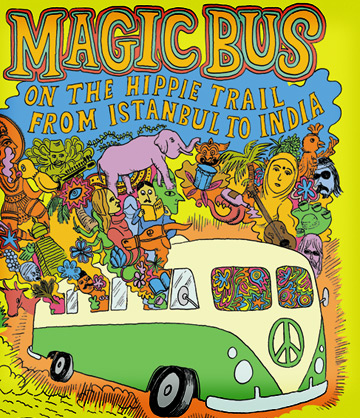
INTERVIEW: With Rory MacLean: ‘Magic Bus’ on the Hippie Trail

Magic Bus book coverby Frank Bures, WorldHum: http://www.worldhum.com

No-one knows exactly how many people in the 1960s and ‘70s set out on the hippie trail from Istanbul through Iran, Pakistan and India, and on to Kathmandu.

Some think as many as 2 million seekers traveled the route in search of some kind of enlightenment.

Regardless, beginning in 1962, when Allen Ginsberg landed in India, and ending in 1979, when the Iranian revolution shut down a big swath of it, the hippie trail was dotted with young Western travelers.

They were, as Rory MacLean puts it, “the first movement of people in history traveling to be colonized rather than to colonize.” In other words, they were traveling to have their minds blown and their lives transformed.

A few years ago, MacLean set out on the trail to see what had become of it and to explore the history of a movement that forever altered the travel world. The result is his fantastic account, Magic Bus, just released in the U.S.

I asked him via email about the Beatles, Middle Earth and how to find a trail of one’s own.  

World Hum: You write that the hippies, or Intrepids, as you call them, followed in the footsteps of the Grand Tourists of the 1800s and before. How do the two groups compare?

Rory MacLean: After the Napoleonic Wars young Englishmen, for the most part wealthy Romantics, traveled in their numbers to Rome and Greece, then the crossroads of Classical and contemporary culture. On horseback, by bone-rattling carriages and in the shadow of the Pantheon, their experiences established the concept of travel as a means of gathering knowledge, as well as an adventure of the Self.

Like the hippies who followed them a century and a half later, the Grand Tourists looked abroad for models for political reform and a free-love alternative to Christianity. Both groups aimed to learn and extract pleasure from the Foreign. Most of all they traveled to be transformed.

It seems that one of the things that pushed people out on the hippie trail was a desire to embrace life in the fullest possible way. Would you say that’s true?

Absolutely. In the ‘60s kids grew up with the world. It was the era of Kennedy, civil rights marches and the pill. Most of all it was an age of amazing technological progress. Everything seemed possible. All of which convinced young people that by changing themselves they could change the world. That lucky post-war generation had the chance to imagine a world without boundaries. They abandoned their parents’ Kingdom Come of postponed pleasure to catch hold of the living, transient world. 

I was surprised that you met so many people along the way who were on the original hippie trail - travelers either trying to track down memories, or who never really left.

For most Intrepids, the trip was the journey of their life - the experience of their life. Just consider how they traveled. A few flew directly to India, but the majority drove east from Europe. War-surplus Jeeps, retired Royal Mail vans, fried-out VW campers, rainbow-colored London double deckers, clapped-out Turkish coaches. I even heard of a Scotsman who drove a Messerschmidt bubble car to India. It was the weirdest procession of unroadworthy vehicles ever to roll and rock across the face of the earth.

I was lucky when researching “Magic Bus.” In Istanbul I met the original Flower Child. In Pakistan I broke bread with a one-time dope-smoking Catholic who converted to Islam and became an imam - because of Bob Dylan.

In Rishikesh I met the Beatles’ doctor. But last year when the book was published in Britain, and the first reviews appeared in the press, something even more amazing happened. Trail “veterans” started writing to me by the dozen.

They’d headed east in the ‘60s or ‘70s and - motivated by reading the book - now embarked on a new trek, up the stairs to the attic to unearth old boxes and dusty journals.

Within a couple of months I’d been sent over 500 photographs, and enough new material to write the book all over again. With their permission I started relaying those stories, along with those I’d already collected, in articles and talks. I even built the www.magicbus.info website - with a Flickr page - to create a meeting place for this community of Intrepid travelers.

A couple of those people mention Middle Earth and “The Hobbit” in the book. I’m wondering how influential those books were as far as inspiring people to set off on their own adventures.

In the ‘60s, books - and song lyrics - were central to communicating ideas. Lyrics inspired, guided - or in some cases misguided - the search for a new way of living, expressing genuine concern for the state of the world.

On the road, books were passed freely between travelers, in keeping with the ‘60s’ openness to new experiences. Top reads included More’s Utopia, Kafka’s The Metamorphosis and Huxley’s Brave New World.

Dog-eared copies of the novels of Hermann Hesse and Tolkien went back and forth from West to East countless times, as did Ginsberg’s “Howl,” Kerouac’s On the Road and especially Henry David Thoreau’s Walden.

“I went into the woods,” he wrote of 19th-century Massachusetts, “because I wished to live deliberately, to front only the essential facts of life, and see if I could not learn what it had to teach, and not, when I came to die, discover that I had not lived.” The same spirit of discovery - including self-discovery - defined many ‘60s travelers’ quests.

To read further, go to: http://www.worldhum.com/features/travel-interviews/rory-maclean-magic-bus-qa-20090112/N2/

Tuesday, August 21, 2012

VIDEO: Taos Journal - Hog Farm 60's Hippie Commune

Hi all,

Here's a great piece of memorabilia about a particular 1960s icon - Hog Farm. This is a video of a visit with Oxygen Nichols, "caretaker" of the infamous Hog Farm, a mobile hallucination-extended family experiment from the 1960's in Llano Largo New Mexico. She also runs the Glam Trash fashion show held in Taos. This was the commune where the likes of Wavy Gravy, Ken Kesey and Ram Das hung out before it was moved to Woodstock NY.


Uploaded on YouTube by livesteel

Saturday, March 31, 2012

ICON INTERVIEW: Twiggy Is Romantically Yours

TwiggyCover of TwiggyBy George R Vaughan

The changing tastes and demands of audiences and the entertainment industry seem to have left Twiggy untouched.

Since she first hit the headlines as a teenager in the mid-sixties, Twiggy has sashayed from one success to another, continually reinventing herself and always remaining ahead of the game.

Vogue cover girl, globally successful model, movie star, accomplished performer, Broadway and theatre star, and the face of the M&S brand, she has touched on almost every aspect of entertainment, gaining in stature every inch of the way.

As her new album - her first in over a decade - Romantically Yours, hits the stores we meet to talk about this release.

"It all came about the way many things in this industry develop; by accident. It certainly wasn't meticulously planned," she smiles. "I had been talking in a fairly relaxed way about doing something in the studio and then EMI approached me, keen to take up the idea. We decided to go with the theme of classic songs, songs that people from all generations might enjoy and I set about picking my favourites".

"Initially I chose 50! But eventually I managed to whittle it down to 12 tracks. My biggest requirement, aside from liking the songs, was that they were all romantic songs that other people could relate to, with timeless classics very much the focal point."

The album gave Twiggy the chance to perform with her daughter, Carly on the Neil Young track Only Love Can Break Your Heart.

"I thought it would be a memorable thing to do and when I suggested the idea to Carly she said she would do it if she liked the song. Fortunately we found one we both loved!"

Twiggy started work on the album in the autumn of 2010 and the initial plan was to release it in time for Mother's Day.

"It was a great idea but I was so busy it meant that I couldn't get everything done in time so our next option was to make it a Christmas release here in the UK. It did give me an opportunity to tweak the album and grow with it. I also wanted to do some filming for it."

From fashion icon to international music artist seems quite a clever journey.

"I'd like to say I was clever and can take credit for it myself but that wasn't how it happened. I do think it is important to evolve and adapt but after five years in the fashion industry, going from an unknown Londoner to Vogue cover girl, it was thanks to the lovely Ken Russell that I made the transition from magazines to movies".

"It was totally his idea. He had me in mind for the lead in The Boyfriend and he sent me off to singing and dancing lessons. The studio was understandably nervous but Ken was not for turning and he surrounded me with some fabulously talented people, which helped my learning experience and the project got the green light".

"I owe him a great deal for his perseverance and he will be sorely missed. There are few visionaries like Ken left in the industry."

The Boyfriend earned Twiggy two Golden Globe Awards that led to further film projects and also a TV show. She also released a number of albums and scored chart success with her single "Here I Go Again".

However, having tasted critical and commercial success with acting and music, the early 80s saw her come to the attention of Broadway when she was enticed to America, to star in My One and Only.

"Film is one thing but the live experience was a whole new dimension and for me it was nerve-racking at first. We did an initial run in Boston, which was wonderful but the Broadway opening night is something I do not remember to this day because I was so nervous. But performing on stage in a hit musical is one of the greatest professional experiences of my life."

Throughout her career Twiggy has enjoyed a very warm relationship with the US and from her first American Vogue front cover in 1967 to her business ventures today, it is a country she retains close links with.

"I love America and the American people. They have always been very warm and generous to me as an artist and I have kept a very strong connection with the country. I have friends on both the East and West coasts - and a few in-between - and I'm back and forth to New York regularly. I think I am what's known as a Nylon!"

"I did a period as a judge on America's Next Top Model and have a clothing business on the Home Shopping Network in America so it's like a second home to me. Only the other week I got a call from some friends in LA who told me they saw a 20 foot poster of me from the 70s on the side of a building and it made me smile".

"Of course, the fashion business was the industry that gave me my big break and without that, well, I wouldn't be here talking to you," she grins.

Does that mean she considers herself less the Londoner and more cosmopolitan these days?

"No, I'm a London girl at heart and I like nothing more than coming home from wherever I am and closing my door on the world and just relaxing with my husband."

And how does someone like Twiggy unwind?

"I like being a wife and mum - although my children are all grown up now - and I like doing normal things, cooking, sewing and I have become absolutely obsessed with jigsaw puzzles. I also still keep up my tap dancing - it's a fun alternative to the gym and helps keep me fit".

"I have a passion for animal welfare and support the cause of animals whenever I can as they don't have a voice so they need someone to speak up for them. Also, supporting the fight against breast cancer is high on my agenda and I am always happy to help in this cause where I can."

The New Year sees little let up in her schedule, as Twiggy will be preparing for the big launch of Romantically Yours in the States.

"It comes out around the 1st February - just in time for Valentine's Day - and my husband and I have our clothing business to keep an eye on."

So, what advice does she have for anyone who is thinking of forging a career in music, film or fashion today?

"It's tough out there. The music industry has moved away from physical sales and down the route of digital, which certainly makes sense but it does take a little of the personality out of the experience. I loved the whole feeling of buying and appreciating an album".

"As for fashion, well fashion is meant to change and evolve so I guess in answer to your question, if you are keen on pursuing a career in any of these fields be prepared to work hard and to expect the unexpected because really, nobody knows anything for sure."

Of course I couldn't close without mentioning those famous M&S adverts.

"They were really fun to do and I think you can see that in the finished product. I got to meet and work with some wonderful people. We have some exciting new plans to work with M&S in the future."

I came away from the interview impressed Twiggy's unassuming and generous nature. Here is an extraordinary woman unconcerned about celebrity for its own sake. Here is a woman who has achieved what she wanted through hard work but also always ready to acknowledge the part others have played in her success.

Now that is iconic.

Article Source: http://EzineArticles.com/?expert=George_R_Vaughan
http://EzineArticles.com/?Twiggy-Is-Romantically-Yours&id=6939959
Enhanced by Zemanta