Showing posts with label Review. Show all posts

Monday, August 28, 2017

Live Yardbirds Tracks Coming Home to Roost

Yardbirds live recording
No bull: The long-lost Yardbirds live recording of 1968 is making a comeback.
Due Nov. 5, “Yardbirds ’68” contains the Anderson Theatre recordings of late March 1968. That NYC set — complete with bogus audience cheers reputedly taken from bullfights — was released in 1971 as “Live Yardbirds: Featuring Jimmy Page” and later withdrawn after protests from group members.
“Yardbirds ’68” also contains eight “studio sketches” tracks from the period.
The new 18-track album was produced by Jimmy Page. The mastering is credited to John Davis, who worked with Page on the Led Zeppelin remasters of several years back.
The Anderson Theatre songs are highlighted by “Dazed and Confused” — the famed psychedelic Led Zeppelin track developed while Page was a Yardbird — as well as his guitar instrumental showcase “White Summer,” a number also shared by the two bands.
Other live tracks include “Train Kept A Rollin,'” “Over Under Sideways Down” and an expanded “I’m a Man.” (“Dazed and Confused” was mistitled “I’m Confused” on the original live album.)
The lineup remained the quartet from “Little Games,” the last studio album. Attempts to record another album for Columbia fizzled and the hitmaking British band broke up in the summer of 1968.
A statement from Yardbirds survivors Jim McCarty, Chris Dreja and Page reads: “We thought this might be lost forever, but we’ve rediscovered it, remixed it. It’s of great historical importance. We’re delighted to see the release.” (Singer Keith Relf, the fourth member of the 1968 Yardbirds, died eight years later.)
“Yardbirds ’68” debuts on double CD, vinyl at standard pricing — and in a pricey “Signed Deluxe Edition” with signatures of Page, McCarty and Dreja. The signed collector’s version goes for just north of $500. So far, the album is only available for preorder on Page’s British web site
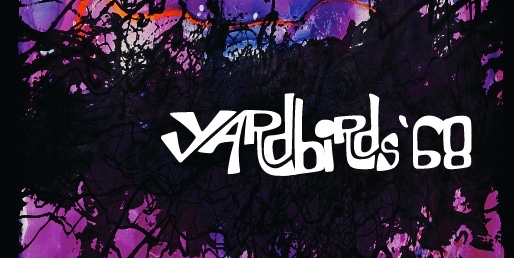
The new album, alas, comes without James Grashow’s beloved woodcut of a bird above New York City (above, right). That cover has been replaced by a psychedelic painting featuring the Yardbirds logo that retains the purple color scheme (top).
The spring of 1968 found the Yardbirds in a strange place. The group’s last attempt at a single, “Goodnight Sweet Josephine,” flopped. Guitarist Page wanted to continue with the psychedelics of late-period Yardbirds tracks such as “Happenings Ten Years Time Ago.” Relf sought a classical-folk fusion. And audiences demanded the hits such as “Heart Full of Soul.”
When the Yardbirds played the Anderson, they already had decided to break up. They played their last show a few months later in L.A.
Page, particularly, objected to Epic Records’ two releases of the “Live Yardbirds” album, which was perceived as a cash-in on the success of his Led Zeppelin. After a 1976 revival of the live album by Columbia Special Products, Page reportedly took legal action and had album materials destroyed or returned to the band. Both versions of the live album remained collector’s item for decades and were heavily bootlegged. The post-production shenanigans such as the bullfight cheers are attributed to the poor original recording done at the Anderson. Those adds-on do not appear on the source tapes and will not be heard on the new album.
The “Yardbirds ’68” studio tracks mostly feature drummer McCarty on vocals, as singer Relf was fading from the band at that point. The producer was Manny Kellem (“Love Is Blue”), who apparently recommended the project be abandoned. Some of the studio tracks surfaced in rough mixes on the (since withdrawn) Yardbirds odds-and-sods album “Cumular Limit” of 2000, although the latest versions may differ and almost certainly will benefit from improved sonics.
The studio tracks:
  • Avron Knows
  • Spanish Blood
  • Knowing That I’m Losing You (Tangerine)
  • Taking a Hold on Me
  • Drinking Muddy Water (version 2)
  • My Baby
  • Avron’s Eyes
  • Spanish Blood
“Knowing That I’m Losing You” was reworked as “Tangerine” on Led Zeppelin’s third album.
McCarty continues to tour with a version of the Yardbirds. Dreja was a member of 21st century Yardbirds lineups but apparently has retired due to health issues. McCarty’s Yardbirds are expected to release a studio album next year.

Saturday, February 11, 2017

ALBUM REVIEW: ‘Crown of Creation’ by Jefferson Airplane

 
“Is it true that I’m no longer young?” Grace Slick sang in “Lather,” the luscious and cinematic opening number of “Crown of Creation.”
 
Slick was singing about the arrested development of her lover, the Jefferson Airplane drummer Spencer Dryden, but by extension she addressed the fast-forward aging afflicting the San Francisco scene. That sunny Summer of Love had given away to the chill winds of LBJ’s 1968.
 
“Crown of Creation” finds the Airplane coming of age, wary but not yet transformed into the jaded radical-chic collective that rolled out “Volunteers” a year later. The erratic and playful psychedelia of “After Bathing at Baxter’s” gives way to songwriting for adults:
“Long time since I climbed down this mountain before,” a weary-sounding Martin Balin sings on “In Time.” “Things I’ve seen here make me want to go running home.”

Slick, a painter, ponders the 1960s’ boho dance - underground art as commerce - on the album’s single, “Greasy Heart”:
He’s going off the drug thing ’cause his veins are getting big
He wants to sell his paintings but the market is slow
They’re only paying him 2 grams now
For a one-man abstract show
And has anyone ever captured the highs and lows of the hippie era better than Kanter in this lyric from the title track, boiled down to haiku: “You are the crown of creation / and you’ve got no place to go.”

The unease comes packaged beautifully. The band performs with precision and assurance, lead by guitarist Jorma Kaukonen and bassist Jack Casady, team players and not yet a faction (their work at times points to the heavy metal of the great live album to follow, “Bless Its Pointed Little Head”).

Time is a major theme. War and the sickening events of 1968 are the undercurrents. “Crown of Creation” does no duty as a concept album, however. It is a collection of songs, some far better than others, most of them recorded on-the-run while the band met its rock-star obligations.

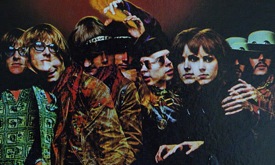
Jefferson Airplane psychedelic band

Despite the album’s prescience and longevity, it remains woefully underrated - here we have the Airplane at their psychedelic peak. They soon would become a rock band, angry and disenfranchised, but with one great album left in them.

“Crown of Creation” opens with a triple offering of morning maniac music.

Slick’s “Lather” employs studio effects to tell its tale of an aging man child. It was inspired by Dryden’s turning 30, and by the arrest of bassist Casady for nudity. The effects - a child’s fearful query; a blast of firepower from a tank - flirt with kitsch, but hold up well. Slick uses a conversational storyteller’s tone, lovely and knowing. “I’m singing the song quietly and softly, like a little kid,” she recalled years later. All other studio Airplane albums open with rockers; commencing with this quiet number is part of “Crown of Creation’s” confident genius.

Balin and Kantner’s “In Time” celebrates a lover, a hippie chick cast in psychedelic tones, “in the colors of what I feel.” A less obvious companion to “Baxter’s” “Martha.” “In Time” brings to mind the softer side of L.A. band Love.

David Crosby’s “Triad” completes the opening trilogy. Slick finds the humanity in Crosby’s come-on to a pair of competing lovers. It is the closest to an embrace (and reaffirmation) of the hippie ideal to be found on the album, and it remains stunning.

Things get back to Airplane(/Hot Tuna) business as usual with Kaukonen’s “Star Track,” a meditation on fame and the scarcity of time. Kaukonen works out with his wah-wah pedal - the guitar effect is your constant companion on this album - warning the listener: “Running fast you’ll go down slow in the end.”

Balin’s “Share a Little Joke” delivers a seemingly whimsical message, belied by the instrumental chaos just below the surface. “I believe in half of you,” Balin sings to his friend. The song reportedly touches on mental illness.

Drummer Dryden gets credit for the brief bit of electronic music, “Chushingura.” It’s a sort-of sequel to “Baxter’s” “A Small Package of Value Will Come to You, Shortly.” Dryden has said it was inspired by the soundtrack to an old samurai film.

Side 2 opens with more generic Airplane and more wah, as Balin works out on the tambourine-shaking ode to freedom “If You Feel.”

Kantner’s classic title track marches to martial beat. The bandleader foresees the yuppie apocalypse in the pages of a science fiction novel:
Soon you’ll attain the stability you strive for
In the only way that it’s granted
In a place among the fossils of our time
(Kantner borrowed from the post-apocalyptic novel “The Chrysalids”).

“It’s trying to make the point that science fiction is politics, and politics is science fiction,” Kantner later explained.

“Ice Cream Phoenix” has Kaukonen returning to the scarcity of time, with Slick providing a surreal vocal interlude.

The rocker “Greasy Heart” finds Slick in full badass mode, dispensing advice in a jumble of words straight out of Lewis Carrol. “Don’t ever change, people,” she warns. “Your face will hit the fan.” It’s a slap at cosmetic beauty and plastic people - a la “Plastic Fantastic Lover.” “It sounds like I’m pointing fingers, but (I was) living it,” the former model has said.

“The House on Pooneil Corners” concludes the album with a scalding dose of acid rock. The title and the familiar amp-shaking feedback that begins the song suggest it’s a mirror-image sequel to “The Ballad of You & Me & Pooneil” from “Baxter’s.” Kaukonen, Casady and Dryden slash and burn their way through as Slick’s Middle Eastern-influenced vocals summon the darkness.

Lyricists Balin and Kantner’s vision is distinctly apocalyptic:
Everything someday will be gone except silence
Earth will be quiet again
Seas from clouds will wash off the ashes of violence
Left as the memory of men
There will be no survivor my friend
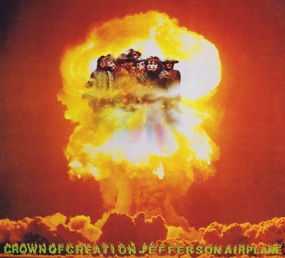
Truth in advertising: The cover of “Crown of Creation” showed the band caught up in a mushroom-shaped cloud. The h-bomb, Kantner said, is our civilization’s technological crown - and the thermonuclear holocaust one very possible outcome seen from the badlands of 1968.

Saturday, October 19, 2013

MOVIE REVIEW: ‘The Source’: LSD’s Long Strange Trip

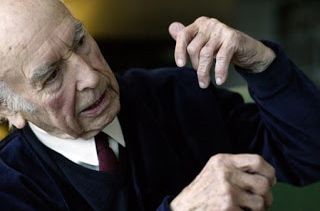
Albert Hofmann in documentary The Substance
Albert Hofmann
by , Psychedelic Sight: http://psychedelicsight.com/9581-source-lsd-movie/

“High” on LSD doesn’t quite cover it.

The hallucinogenic drug provided such a mind-altering experience that almost all users of the 1960s swore off the stuff, sooner or later.

Mostly sooner.

As a social phenomenon (and widespread social problem), LSD’s run lasted only a few twisted years in the 1960s. But its influence lingers, like some never-ending flashback.

Martin Witz’s splendid documentary “The Substance: Albert Hofmann’s LSD” artfully incorporates archival footage, new interviews and clips from anti-drug propaganda films - feeling at times more like a science fiction film than documentary.

It tracks the bizarre drug from its first synthesis in a Swiss laboratory in 1948 to modern-day efforts to use it in treatment of people with terminal illnesses.

Icarius Films has released the 90-minute “The Substance” on DVD. It includes a 27-minute interview with filmmaker Witz shot at a German film festival. Audio and video are good enough.

The Swiss documentarian said he took on the project after wondering why no one from his nation had tackled the story of chemist Albert Hofmann (pictured) and his “slightly strange Swiss export.”

“This substance traveled all over the globe, causing massive upheaval,” Witz says. Yet, before long “it disappeared completely.”

Neither permissive nor judgmental in approach, Witz nevertheless found himself a target of critics who said his film was championing the drug (he says he’s tripped, but was never a member of the “esoteric community” of habitual LSD users).

Witz pursued Hofmann, who lived in relative seclusion at age 102, finally arranging an interview. Hofmann died the day they were to talk. “The Substance” therefore relies on a satisfying interview filmed in 2008, shortly before the chemist turned 100.

Of the thoughtful Hofmann, Witz says, “he had the class to pay attention” to what he had wrought. He was not “a guru or a holy man.”

Hofmann says in the film, “I think that a chemist who is not a mystic is not a real chemist.” There are clips of Hofmann journeying deep into Mexico, sharing his LSD with a tribe of Indians whose religious rituals involved natural psychedelics. No one seemed to notice a difference.

Hofmann said he never thought LSD would hit the streets. He wrote U.S. professor Timothy Leary - of “turn on, tune in, drop out” fame - accusing him of forcing LSD on young people by advocating its use.

LSD remained an untested drug, Hofmann told Leary, and its startling experiences required “a certain maturity” to handle. A characteristic in short supply in the hippie culture of the late 1960s.

Leary emerges in “The Substance” as a villain of sorts, or at least a fool, with TV personality Art Linkletter denouncing him as “a poisonous evil man” (Linkletter blamed the death of his 20-year-old daughter on LSD).

The film also spends time with an unapologetic Nicholas Sand, the man who produced and mass marketed “orange sunshine” acid.

Sand spent time in more than a dozen prisons over the years and continued to make hallucinogens for decades. “Am I a criminal? Of course I’m a criminal,” the Buddhist says.

“The Substance” skims over the link between LSD and creativity, but there are clips of the Beatles and Jimi Hendrix in their acid-influenced periods. We fly over the city of mud that was Woodstock, and listen to the Grateful Dead in a San Francisco park.

“Mountain Girl” (Carolyn Elizabeth Garcia), the widow of Jerry Garcia, unveils the Merry Pranksters’ famed Furthur psychedelic bus, stored away in a barn, and talks about the early days of LSD in the Bay Area:

“LSD came along - it was hey, here’s another direction to go in,” Garcia says. “We got very deep into it ourselves. Magic carpet rides inside our minds. Everybody wanted some.” As the media spread the word, the whole scene went to hell in about a week, she says.

A happier ending seems to come from Johns Hopkins University’s 21st century experiments with the use of psilocybin mushrooms by terminal cancer patients suffering from depression.

The psychedelic experience makes the approach of death “quite manageable for them.” Psychiatrist Stanislav Grof says the patients are able to “radically change their concept of death” - making the passing into an adventure. He calls the study “very moving.”

Thursday, October 17, 2013

REVIEW: Ouch! The Rutles Returning on Blu-Ray


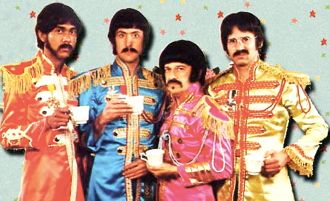
Eric Idle’s faux Fabs return in “The Rutles: Anthology,” a Blu-ray/DVD pack that hits these shores Dec. 3.

Included, of course, is “All You Need Is Cash,” the original 1978 TV special, which was produced by “SNL” chieftain Lorne Michaels.

The rock mockumentary is widely credited as inspiration for the more ambitious (and more successful) “Spinal Tap.”

The title is making its bow in HD and on Blu-ray, sourced from the original film stock. The telefilm last was digitally restored for its 30th anniversary in 2008, followed by a DVD rerelease.

The four Rutles were played by Monty Python’s Idle, Bonzo Dog Doo-Dah Band comic Neil Innes, Beach Boys veteran Ricky Fataar and drummer John Halsey.

Innes wrote the lion’s share of those spiffy Beatles parody songs, such as “Cheese and Onions” (“A Day in the Life”), “Ouch!” (“Help!”) and “Piggy in the Middle” (“I Am the Walrus”).

He was in the John Lennon role, with Idle as Paul McCartney (who apparently wasn’t amused). Idle’s pal Harrison plays an interviewer in the 76-minute telefilm.

Other real rock stars going along with the joke in “All You Need Is Cash” - often just called “The Rutles” - include George Harrison, Mick Jagger, Paul Simon, David Bowie and Ron Wood.

John Belushi, Dan Aykroyd and Gilda Radner made the “Saturday Night Live” connection. Bill Murray played Bill Murray the K.

The band originally was introduced by Idle as part of his post-Monty Python BBC2 satire “Rutland Weekend Television,” an “SCTV”-like series that co-starred Innes.

Broadway Video’s “The Rutles: Anthology” also offers a new interview with Idle, 2004′s sequel “The Rutles 2: Can’t Buy Me Lunch” and the original “Rutland Weekend” sketch from “Saturday Night Live” that aired in 1976 when Idle hosted the late-night show.

The package “is remixed and restored to all its glory,” the video label says. SonicPool Post Production provided film cleaning, HD formatting and picture restoration for the project.

The Rutles’ music of 1978 was collected on “The Rutles” CD in 1990. “Archaeology,” a 1996 collection of “outtakes” (new recordings made without Idle) was last remastered and re-released in 2007.

“Magical Mystery Tour,” the Beatles’ own experiment in television films, for better or worse, was released on Blu-ray in the summer of 2012.